
Karin Rocke
Karin Rocke is a fashion designer with an impressive career and a deeply rooted passion for craftsmanship and aesthetics. From an early age, she was surrounded by fashion - shaped by her mother and grandmother, who instilled in her a keen sense for fabrics, cuts, and artisanal quality. Her journey eventually led her to Paris, where she spent many years working at Yves Saint Laurent, gaining valuable insights into the world of high fashion. Today, she brings her international experience, distinctive creative style, and exceptional eye for yarn quality into her own collection.
I know Karin through the moclue networking events—and I’m very excited to learn more about her story, her influences, and her vision of fashion in this conversation.


©Karin Rocke
What inspired you to become a fashion designer?
I grew up surrounded by fashion—my mother and grandmother both sewed and knitted a lot. My bedroom was right next to my mother’s studio, where fabrics, colors, and patterns were constantly coming to life. There were always fashion magazines like Vogue and Madame lying around, which I devoured as a teenager. My mother and I often traveled to Paris, and when I saw designer shows by Yohji Yamamoto, Yves Saint Laurent, and Montana on the TV program "Neues vom Kleidermarkt" by Antonia Hilke, I knew I wanted to be part of that world.
Did you study fashion design right after school?
First, I trained as a tailor - that was quite common at the time. Looking back, I’m really glad I did, because those skills have helped me time and again. After that, I studied fashion design in Hamburg, at Armgartstraße, and then went straight to Paris to work with Bless.
How would you describe the style and philosophy of your label?
My label stands for high-quality craftsmanship and special materials. It’s important to me that people feel comfortable in my pieces - and each one has a unique twist. Nothing is basic. I put a lot of thought into whether a sleeve should be narrow or wide, whether the volume should be airy or more figure-hugging. Every design is a conscious decision.
My garments are like an inspiring personality - they have presence, quality, and a subtle sense of understatement. You simply feel good wearing them.
What challenges did you face when starting your own label?
The challenges never really stop - whether it’s finding good suppliers or handling production. That’s not just something you deal with at the beginning; it continues to this day. I once saw an interview with Jil Sander where she said: You have to keep retying your backpack. I completely understand that now. The fashion industry is incredibly dynamic, and the pace just keeps accelerating. That affects both quality and creativity - far too often, it’s just about speed and imitation.
How has your business model evolved over time?
These days, I focus heavily on online business, which allows me to offer my customers high-quality pieces at a better price point.
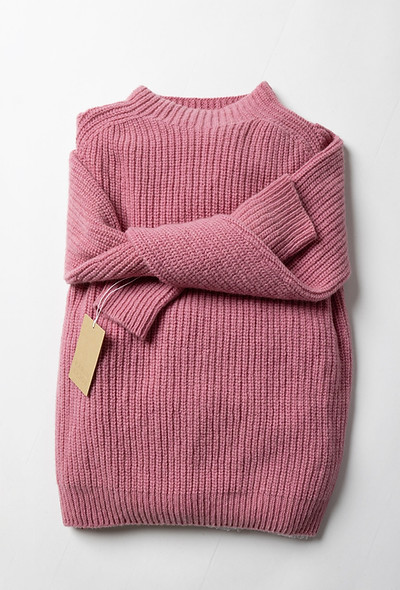
What’s especially important to me: I have a lot of direct contact with my customers. I receive emails and letters telling me how much they love the pieces - which of course brings me great joy. I’ve also recently added customer reviews to my website, which new visitors really appreciate. One thing that consistently gets mentioned is the quality of the materials. I feel that sensitivity to fabric quality has been lost somewhat - often due to the abundance of blended fabrics and less durable materials on the market. With my products, I consciously aim to take a different path.
You lived in Paris for over ten years. How did that time shape your view of fashion and design?
Even before moving there, I visited Paris often, and I still go regularly. The city is simply different - fashion is everywhere, it’s tangible. That left a lasting impression on me. French women have a special instinct for fashion - it’s both seductive and effortless. In France, fashion isn’t just worn; it’s lived. Especially in Paris, it’s part of the culture. That makes the working environment more emotional and creative.
How does the fashion scene in Paris differ from Hamburg?
Paris is considered a fashion capital - there’s more space for individuality and stylistic freedom. In Hamburg, the style tends to be more understated and functional, especially in winter. I personally like understatement, but not uniformity. For me, it’s about clean lines, special materials, and a sense of intentional expression - even when it’s cold.
What was working in Paris like compared to working in Hamburg?
In Paris, I was part of a large team - often 15 people - but there was little exchange with designers from other houses, simply because the work was so intense. I usually worked from Monday to Sunday. By Sunday at 5 p.m., the latest designs had to be ready for review with the directors.
In Germany, I worked for Strenesse, among others. Gabriele Strehle had an incredible talent for bringing great people together. I still have at least five close friends from that time - we regularly exchange ideas, give each other tips, and help one another out, for example when I’m searching for special fabrics.
%20Kopie.jpeg)
©Karin Rocke

©Karin Rocke
How did you experience the transition from working in a major fashion house to launching your own brand?
When I became pregnant, I found myself at a turning point. I had a few job interviews in Paris, but I no longer felt the same passion for it as before. So we decided to move back to Hamburg - and I took the leap into self-employment.
The transition was definitely a challenge: suddenly, I had to make every decision on my own. In a big fashion house, you often develop several prototypes and experiment. As a self-employed designer, you have to hit the mark right away - there’s neither time nor budget for trial and error.
What I missed most was the exchange. I’m actually a team player, but when you work alone, you have no colleagues. Communication is limited to suppliers - that’s a completely different dynamic.
What fascinates you about knitwear, and why did you choose to specialize in it?
Funny enough, that wasn’t the plan from the beginning. Knitwear just gradually became my focus. I initially worked with a sales agency that didn’t want to sell ready-to-wear garments, which nudged me more and more toward knitwear.
Sometimes things just happen by chance: I once designed a skirt just for a photo shoot. I sent it to a blogger to complete the outfit. That skirt took off and ended up selling a thousand times better than the actual knit pieces. Suddenly I found myself in full-scale skirt production.
I had come across a beautiful fabric remnant - just eleven meters - and as soon as the skirt went online, I had 60 orders in my inbox and had to quickly figure out where to source more material.
This experience reminded me that fashion is constantly in motion. You have to stay flexible and in tune with what your customers want. Knitwear is still a core part of my label, but my offering has become more focused. Alongside pure merino wool, I now also work with a blend of 70% merino and 30% cashmere. It’s important to me to offer materials suitable for different temperatures—especially since that’s such a crucial factor for women.
Where do you sell your collections? Only in Germany?
In the very beginning, I actually sold in Japan. Entering the German market wasn’t easy at first. So I went to a trade show in Paris - with just six oversized sweaters in white, red, blue, and grey. That was all I had. I hung the sweaters side by side, added a strong photo next to them - and that was it. I stood there with five other new designers and immediately received three large orders, from Japan and the USA. By the way, the US buyer is still ordering from me today.
When did you realize you had a loyal customer base?
That took about three years. At first, it’s mostly friends and acquaintances, but at some point, you start noticing that orders keep coming in from the same names. That’s a great feeling. Almost every customer who orders once comes back again. It really affirms my work - especially because I do everything myself and no longer have a sales agency.
Are most of your customers from Hamburg?
Interestingly, no. I have many customers from France, Italy, and all across Germany - often from places I’ve never even heard of. It really shows how wonderfully online retail can work.

©Karin Rocke
And what age group do your customers belong to?
Very mixed – from 30 to 80, maybe even 90. Who knows!
How have you built your network in the fashion industry over the course of your career?
That often happens quite naturally. During my time at Strenesse, I quickly became friends with colleagues, and the same was true at Saint Laurent, where I still maintain connections today.
In December, I had a pop-up store in Paris – together with HappyHaus.fr, a German designer based in France. We opened a small boutique on Rue de l’Université. It was amazing to see how many former colleagues from Saint Laurent stopped by. One of my former pattern cutters even dressed herself head to toe in my collection and said that the fine details were “so typically Karin.”
You also meet a lot of people at trade shows. You come across designers who may work in completely different areas – like Sandy, who makes jeans – but in the end, we all face similar challenges. Sometimes, you just need someone you can call to ask: “Has this ever happened to you too?”
©Karin Rocke

©Karin Rocke
Do you feel your style is perceived as “typically German”?
Not really. But it is fascinating to observe how differently customers shop – depending on the country, mentality, and context.
At Saint Laurent, I used to come in very early to have some quiet time for creative work before the day really got going. The president would sometimes walk through the building at that hour and joked about my German punctuality.
What advice would you give to young designers who want to start their careers today?
I would advise them not to go straight into self-employment. It’s incredibly valuable to first work at a fashion house and learn how everything really works. You need to understand production, touch the fabrics, experiment with patterns. You need to understand materials to create great results.
How important is craftsmanship to you as a designer?
For me, having a solid foundation in craftsmanship has always been essential. In the atelier, I knew exactly what I was talking about because I could draft patterns and sew myself. It was important to me not just to deliver ideas, but also to step in when needed and say, “This is how it works.”
A deep understanding of materials is just as important. Where does the fabric come from? How was it processed? You have to touch the material, feel it, and work with it. One of my former interns once said that was one of the most important things he learned from me: not just to look at materials, but to feel them.
Is it a crêpe? Is the yarn tightly twisted? Is the fabric felted? These are things you might learn briefly in school – but you can go much deeper later. I believe it's essential to understand a material before working with it.
How does it react when you pull or crumple it? Does it drape nicely or does it break? That kind of knowledge makes a huge difference in the design process.
Do you feel that young designers today place less value on this kind of knowledge?
I can’t say that for sure. In many cases, designers aren’t even involved anymore when it comes to fast fashion.
Some designs are incredibly well copied – especially in knitwear. The materials are often poor, but the construction and fit are still spot on.
I get a lot of feedback from customers, especially those around my age. They often say, “This feels like the quality we used to have – it’s so rare to find now.”
That makes me proud, of course – but it’s also concerning how much that sense of value has been lost.
Who were your biggest role models, and how did they influence you?
I find the term “role model” a bit tricky – but there were definitely people who had a strong impact on me.
When I came to Paris and started at Saint Laurent, it was a whole new world for me. Suddenly I was surrounded by people who shared my passion for fabrics, silhouettes, and fashion – and who knew so much more than I did at the time.
And then there were the suppliers with incredible know-how. Looking back, it’s a miracle I didn’t just run into the office every morning with excitement.
I didn’t have one specific role model, but I loved working with Stefano Pilati (Creative Director at YSL). Those were intense years from which I learned so much.
Gabriele Strehle also inspired me deeply. It wasn’t just the work itself – it was her way of seeing things, shaping them, making decisions.
Do you have an example of that?
I often think back to one of the first jersey fittings with Stefano. It was the middle of summer, unbearably hot, and we were working on T-shirts.
We were discussing the tiniest details – the finishing at the hem, whether to use a 2-needle or 1-needle stitch. It was just the three of us: Ilaria, Stefano, and me.
Suddenly he looks at me and says, “Karin, you’re wearing Helmut, right?” – meaning Helmut Lang, of course.
It was its own little world – a bit nerdy, but incredibly fascinating.
How old were you when you started working at Yves Saint Laurent?
I was 30. I had completed a tailoring apprenticeship, finished my studies, and done an assistant year at Bless.
How did you get the job at Yves Saint Laurent?
I had been working at Bless in Paris, a fashion label run by two German designers - one in Berlin, one in Paris. In Paris, I worked with Désirée, who was also a stylist for Self Service Magazine.
That job allowed me to attend the big shows - I saw Azzedine Alaïa live for the first time, not just on a screen. I completely immersed myself in Paris.
After the assistantship, I was actually mentally preparing to move back to Germany -I just didn’t know how things would continue.
And then - almost unbelievably - Louis Vuitton called. And Yves Saint Laurent did too. Both on the same afternoon.
Both wanted me.
Wow. So why did you choose Yves Saint Laurent?
That had always been my dream. At the time, Yves Saint Laurent was much more focused on apparel than Louis Vuitton. So the choice was easy for me.
Was there a piece of advice that especially shaped you?
Not one specific sentence, but I was incredibly lucky to have people around me who supported me - most importantly a friend in Paris, with whom I was living at the time.
She was like a mentor to me: honest, direct, clear. She wasn’t in the fashion industry herself, so she had a bit of distance and a different perspective.
And my family has always supported me - that’s been incredibly important.
You restructured your label - what triggered that decision?
I realized I wanted to focus on what really matters.
When you work with agencies, you often have to deliver full collections - at least 20 pieces. But in the end, maybe only five of them really sell.
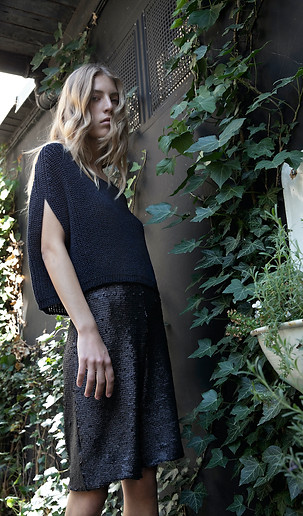
That made me reflect. I’d rather put out individual styles that are well thought out - precise, relevant, and close to what my customers actually want.
©Karin Rocke

©Karin Rocke
What projects are you currently working on?
Recently, I had the opportunity to design a dress for a producer attending the Berlinale – that was a wonderful change of pace.
I'm also in the process of updating my online shop, but that’s an ongoing task. It’s not just about getting the technical side right – the photos also have to be perfect. It’s essentially my virtual shop window.
How do you see the future of the fashion industry?
I think many people are losing their sense for quality materials - yet at the same time, more and more are longing for exactly that: quality, well-cut garments, and premium fabrics. Sustainability is, of course, a huge topic.
For example, I work with deadstock fabrics for my ready-to-wear pieces and use cruelty-free Merino wool from certified sources.
Do you look to the future with optimism or pessimism?
I’m optimistic. My new concept feels right, and I’m excited to continue along this path.
I hope that people will start to consume more consciously - check the label and ask themselves, “What am I actually wearing?” Products deserve more appreciation. Better to have one piece less in your wardrobe...